
Home » Fossils » Green River Formation Fossils » Green River Fossil Insects
Green River Formation Fossil Insects - Dragonflies, Beetles
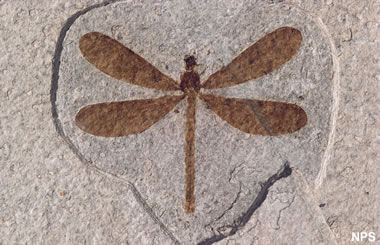
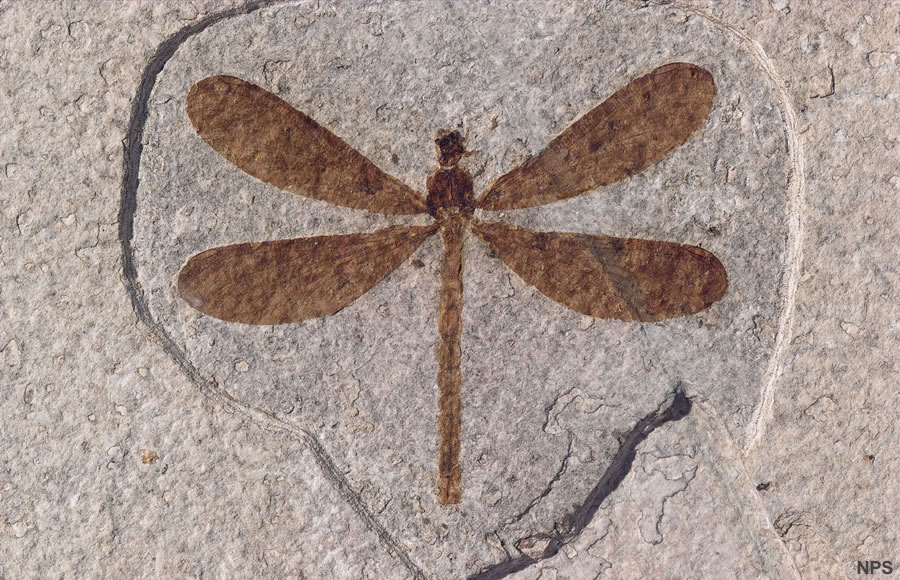
Fossilized dragonfly: Many species of insects are found in the Green River Formation including dragonflies. The wetland margins of Fossil Lake provided ideal breeding and foraging opportunities. National Park Service photo. Enlarge image.
Introduction
The fine-grained limestones, oil shales and marls of the Green River Formation are excellent rock types for preserving tiny creatures such as insects. The fine-grained rocks enabled the preservation of tiny details. These photos from the National Park Service - Fossil Butte National Monument are examples of some of the many types of fossil insects preserved in the Green River swamps and intermountain lakes.
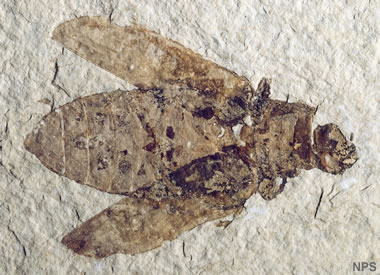
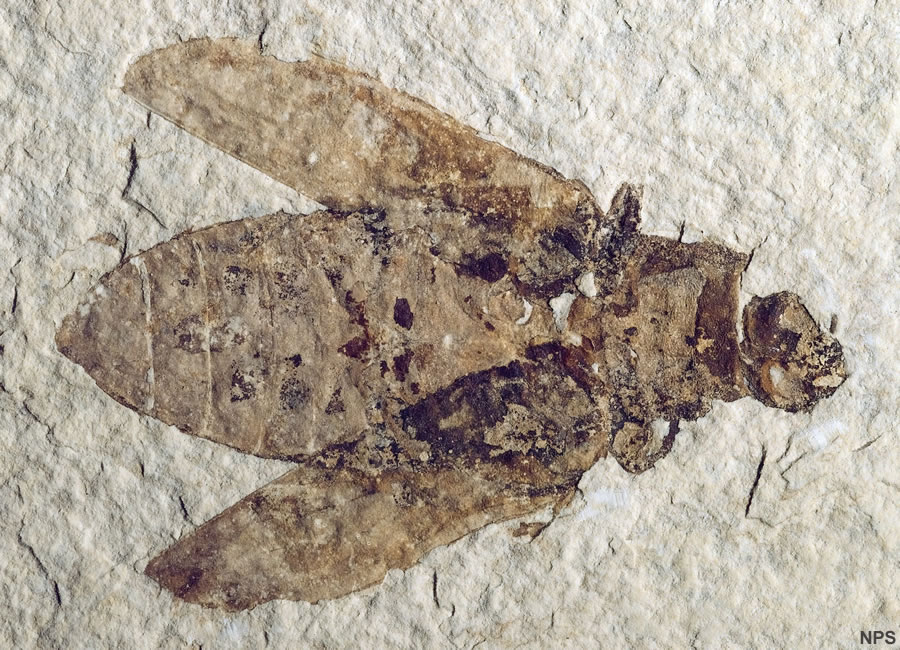
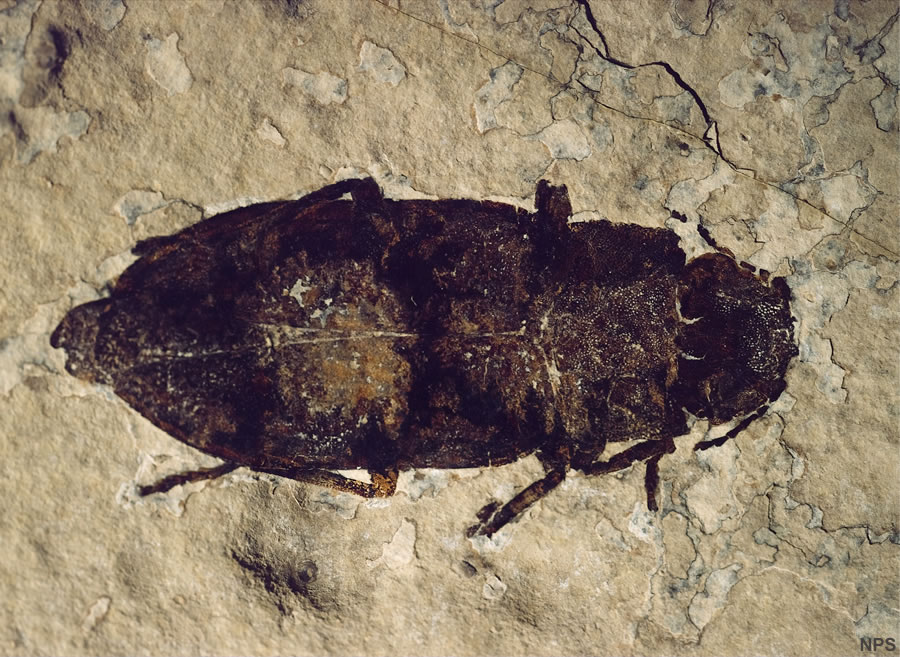
Fossilized beetle: Beetles are the most diverse and abundant group of insects today but are poorly represented as fossils in Fossil Lake. National Park Service photo. Enlarge image.
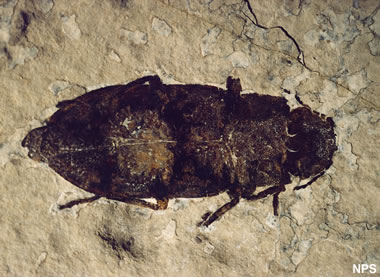
Buprestidae: Because of their glossy iridescent colors, members of the family Buprestidae are known as jewel beetles or metallic wood-boring beetles, such as the emerald ash borer. National Park Service photo. Enlarge image.
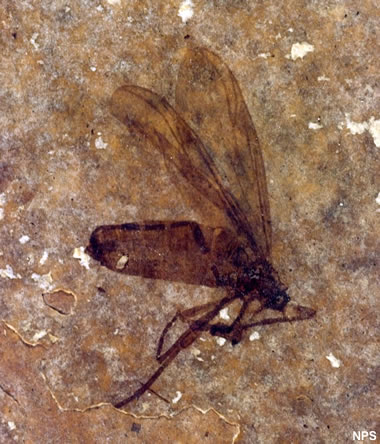
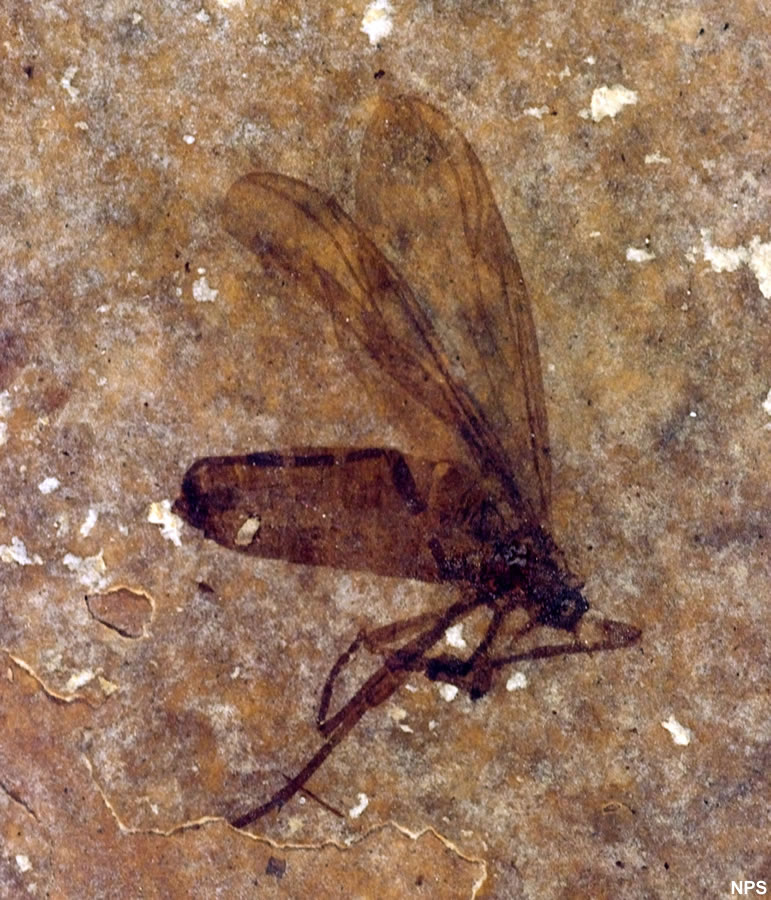
Fossilized fly: The insect fossils from Fossil Lake sometimes show color patterns, wing venation, and sex-related characteristics. Notice the venation pattern on the wings of this fly. National Park Service photo. Enlarge image.
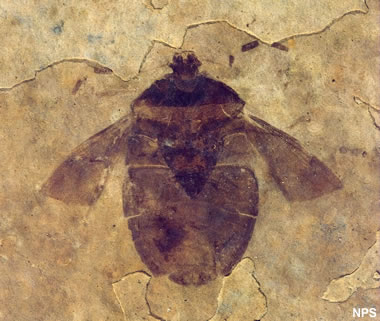
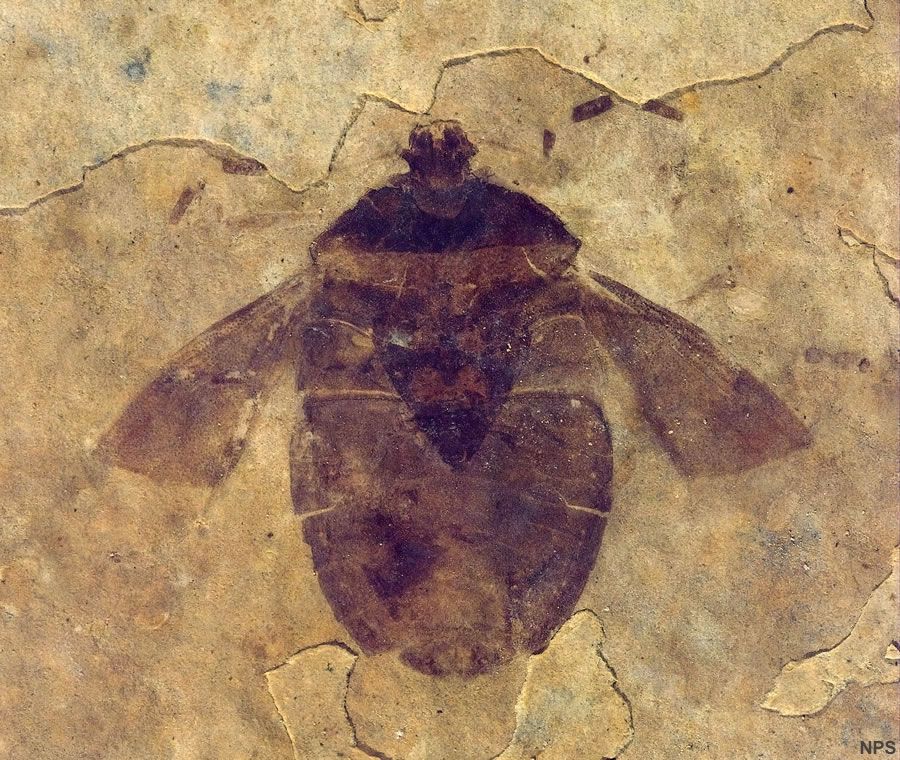
Hemiptera: Collectively known as "true bugs," Hemiptera species include cicadas, aphids, planthoppers, leafhoppers, shield bugs and others. (Fossil is approximately 1 cm long.) National Park Service photo. Enlarge image.
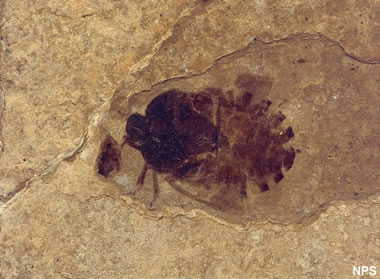
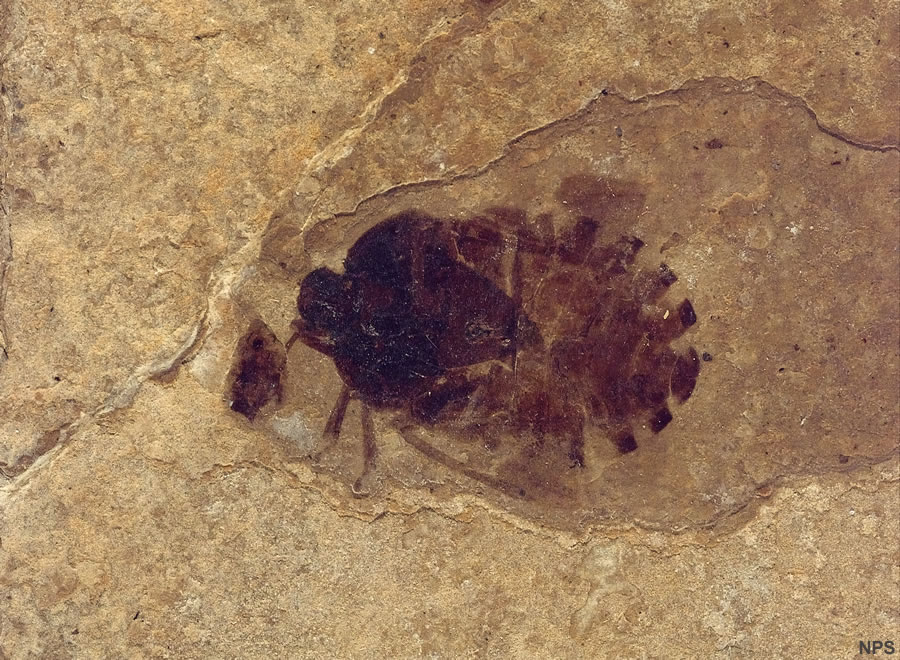
Hemiptera: Preserved insects from Fossil Lake sometimes show color patterns, wing venation, and sex-related characteristics. Note the pattern around the edge of this true bug's abdomen. National Park Service photo. Enlarge image.
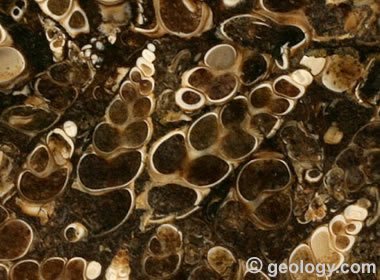
Turritella Agate: The Green River Formation is also the source of a fossil gem material known as Turritella Agate. It contains fossil gastropod shells.
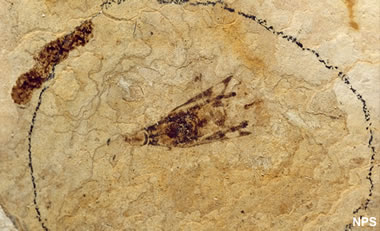
Fossilized insect: Preserved insects from Fossil Lake sometimes show color patterns, wing venation, and sex-related characteristics. Note the pattern on the wings of this fossil insect. National Park Service photo. Enlarge image.

| More Fossils |
 |
Animal Fossils |
 |
Fossil Fish |
 |
Fossil Gems |
 |
Ammolite |
 |
Gifts That Rock |
 |
Petrified Wood |
 |
The Green River Formation |
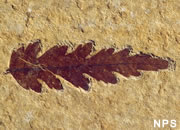 |
Plant Fossils |

Find Other Topics on Geology.com:
|
| ||
|
| ||

|
| ||

|
|