
Home » Fossils » Green River Formation Fossils » Green River Fossil Bat, Crayfish, Turtles
Green River Fossils: Bats, Crayfish, Horse, Turtles
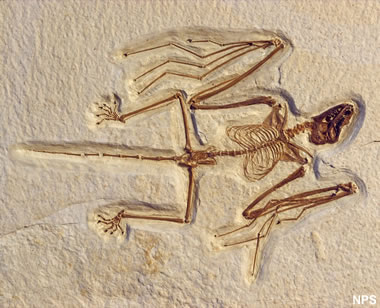
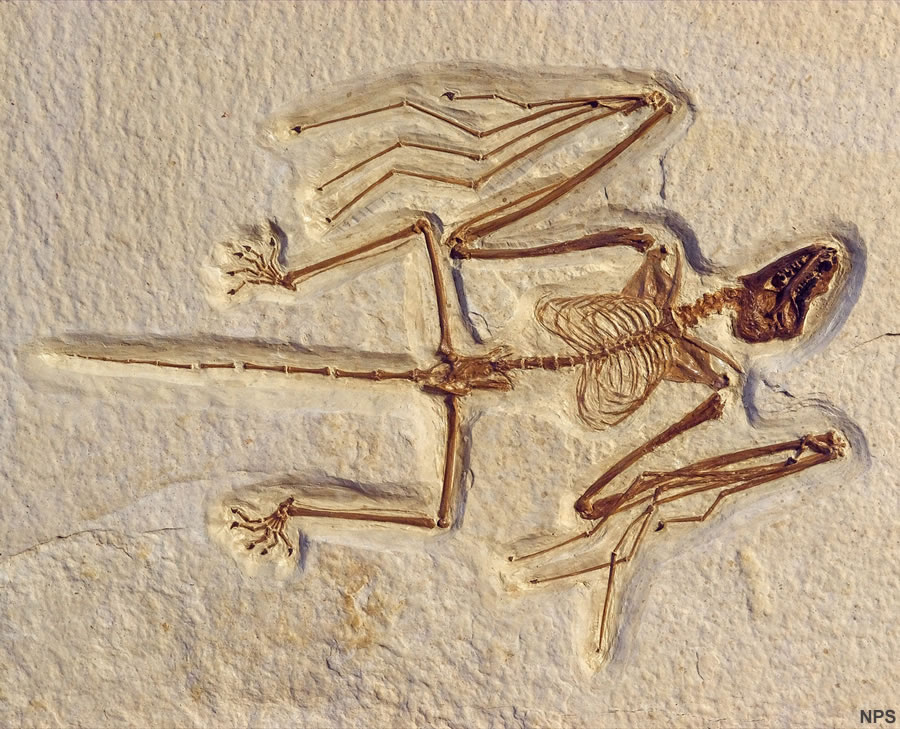
Green River fossil bat: This 5.5 inch long bat is the most primitive bat known. Claws on each finger of its wings indicate it was probably an agile climber and crawled along and under tree branches searching for insects. National Park Service photo. Enlarge image.
Introduction
The Green River Formation has yielded some of the best-preserved and oldest fossil bats ever found. It has also produced a variety of other unusual fossils such as turtles, crayfish, and horses. The photos shown below are by the National Park Service - Fossil Butte National Monument.
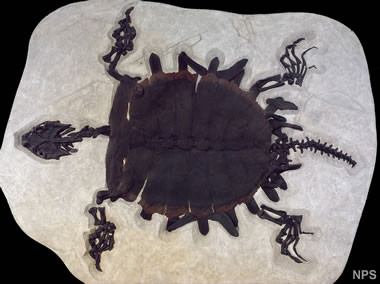
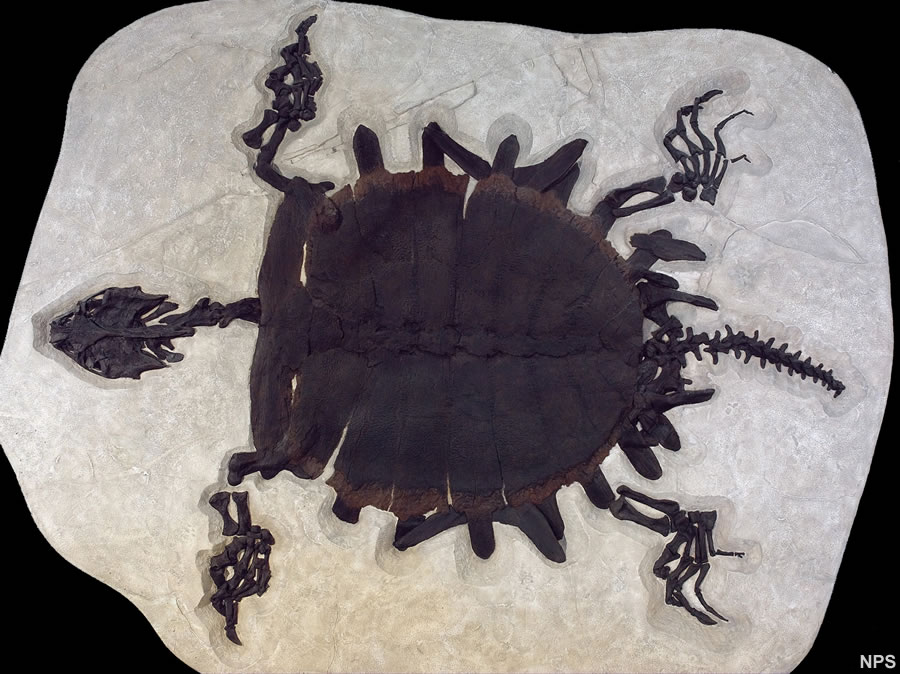
Green River fossil turtle: This 1.7 meter (5 foot 6 inch) softshell turtle is one of the largest turtles from Fossil Lake. During the Eocene, trionychid turtles reached maximum size. Today, North America's largest softshell turtles reach 51 cm (20 inches) in length. National Park Service photo. Enlarge image.
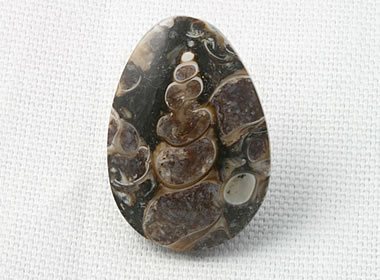
"Turritella Agate" is the name given to a brownish gem material that contains spectacular fossil snail shells entombed in a semitransparent agate. It is possibly the best-known fossil from the Green River Formation. When the Green River was being deposited, the spiral-shaped shells accumulated in the sediments of the shallow inland sea. A few lenses of this snail-bearing sediment were then agatized by the deposition of fine-grained silica (chalcedony - also known as agate) into the cavities of the shells and the voids between them. If the sediment was completely agatized, it has potential lapidary (gem cutting) potential.
Although millions of people have called this material "Turritella" for several decades, the name is actually incorrect. Somehow it acquired the Turritella name after a genus of fossil snails that are very similar to the shells in the agate. The proper name of the snails is "Elimia tenera," a member of the Pleuroceridae family. Perhaps a better name would be "Elimia Agate" which is not quite as elegant.
To learn more about the Turritella - Elimia naming error, visit the Paleontological Research Institution - people who know what they are talking about when it comes to fossils.
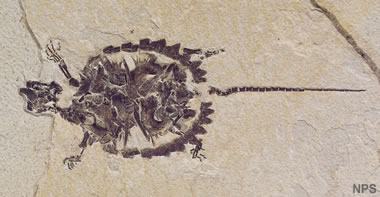
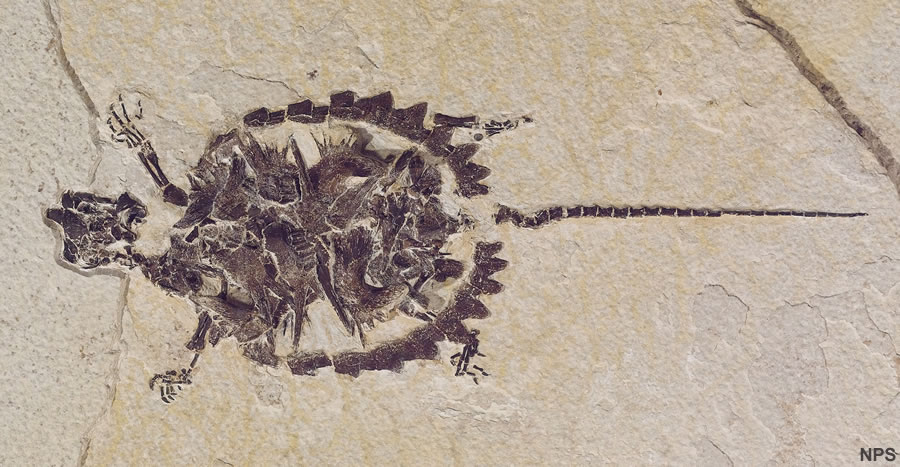
Green River fossil turtle: This ten-inch-long turtle belongs to the Baenidae family, an extinct North American group. Shell characteristics, a very long tail and recurved claws suggest they were strong bottom-walking turtles. National Park Service photo. Enlarge image.
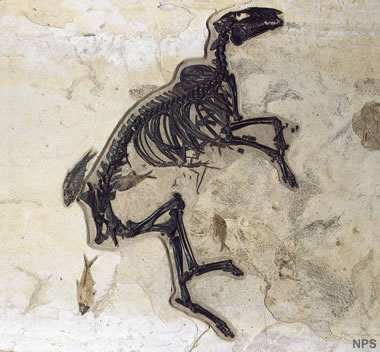
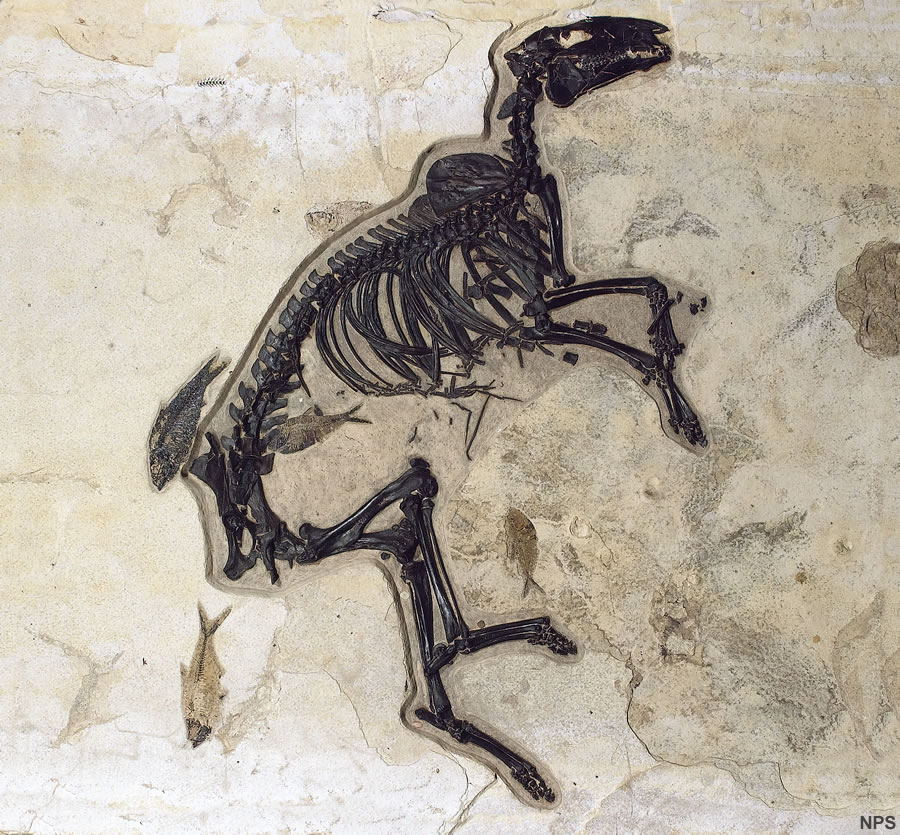
Green River fossil horse: Most mammal fossils consist of teeth and bone fragments. This fully-articulated early horse is an extremely rare find and to date, the only horse found in the Green River Formation. National Park Service photo. Enlarge image.
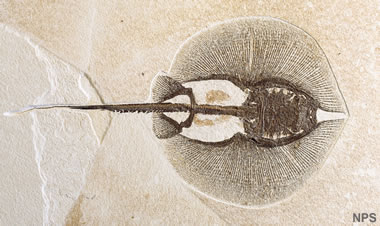
Green River fossil stingray: Heliobatis radians had small teeth for crushing snails and other mollusks and barbed spines on the tail for defense. National Park Service photo. Enlarge image.

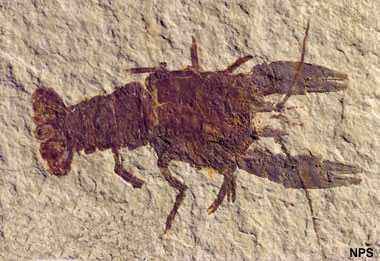
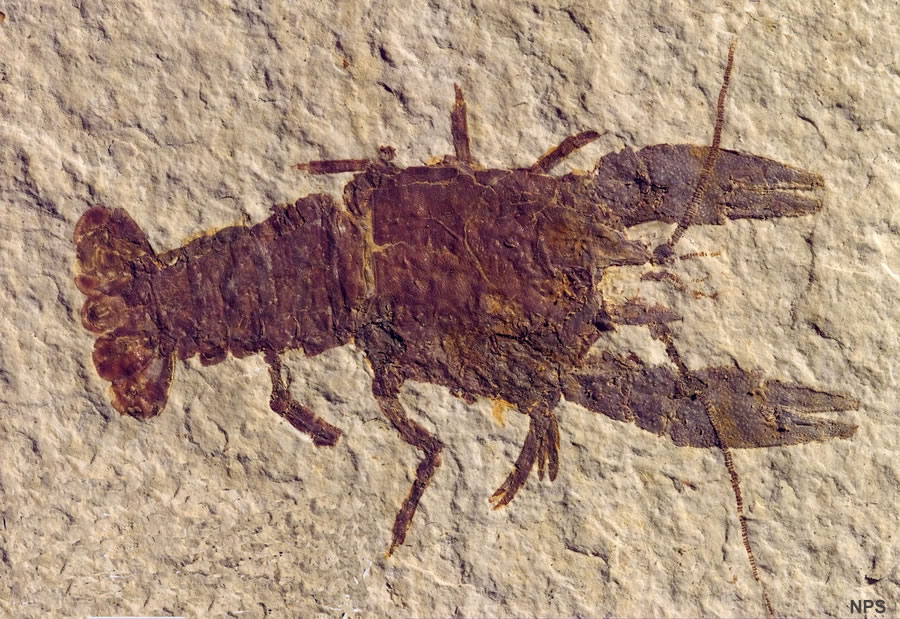
Green River fossil crayfish: Crayfish lived in the shallow, near-shore water of Fossil Lake. Procambarus is known only from the Eocene deposits of Fossil Lake. Its closest living relative, Austrocambarus, is found in Mexico. National Park Service photo. Enlarge image.
| More Fossils |
 |
Animal Fossils |
 |
Ammolite |
 |
Petrified Wood |
 |
Fossil Fish |
 |
Fossils and Beer |
 |
Petrified Palm |
 |
Gifts That Rock |
 |
Peanut Wood |

Find Other Topics on Geology.com:
|
| ||
|
| ||
|
| ||

|
|