
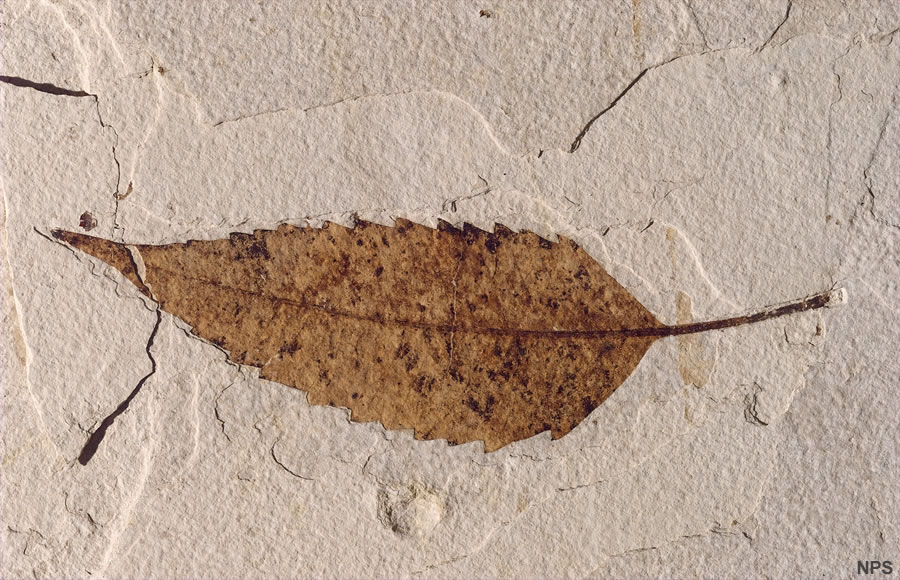
Fossilized leaf: Two hundred and seventy-six leaves, seeds, and flowers are known from the Fossil Lake deposits. Fossil plants are key in determining the climate of past environments. National Park Service photo. Enlarge image.
Introduction
Abundant plants grew on broad swampy areas that developed around the margins of the intermountain lakes of the Green River Formation. These plants were often preserved in the fine-grained limestones, marls and oil shales of the lakes or in the clastic rocks associated with the swamps. Photos by the National Park Service - Fossil Butte National Monument.
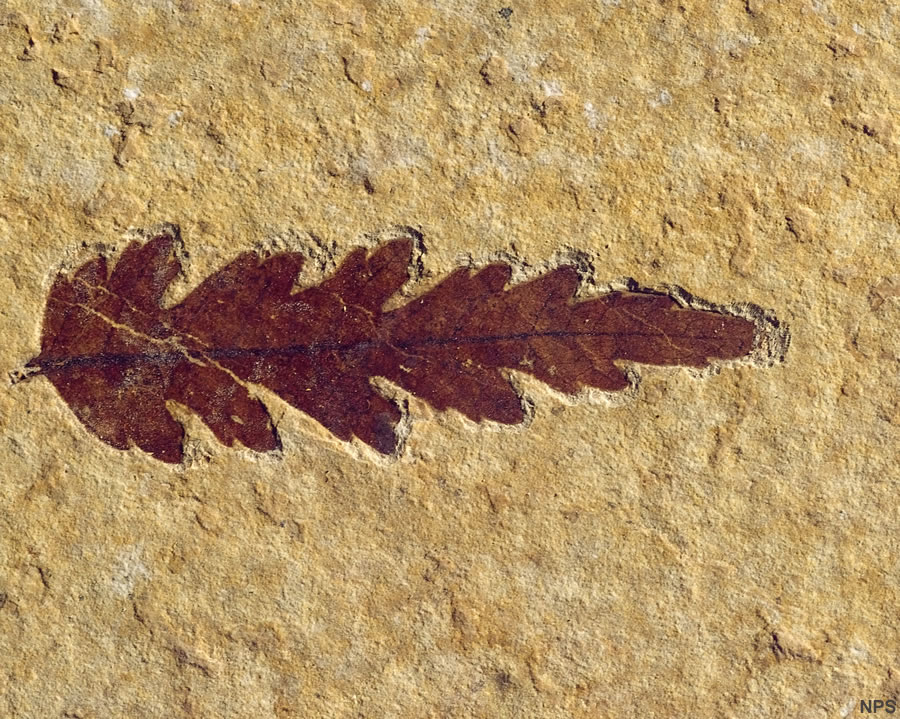
Fossilized leaf: Over 300 fossil plants have been discovered in the Fossil Lake deposits. Enlarge image.
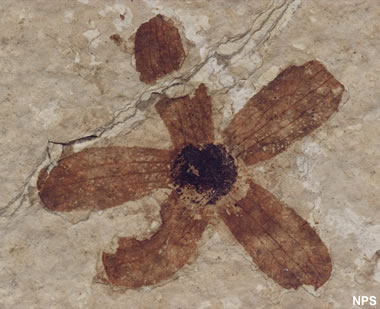
Fossilized flower: The detailed preservation of this flower is due, in part, to the fine-grained nature of the limestone matrix it is found in. Enlarge image.
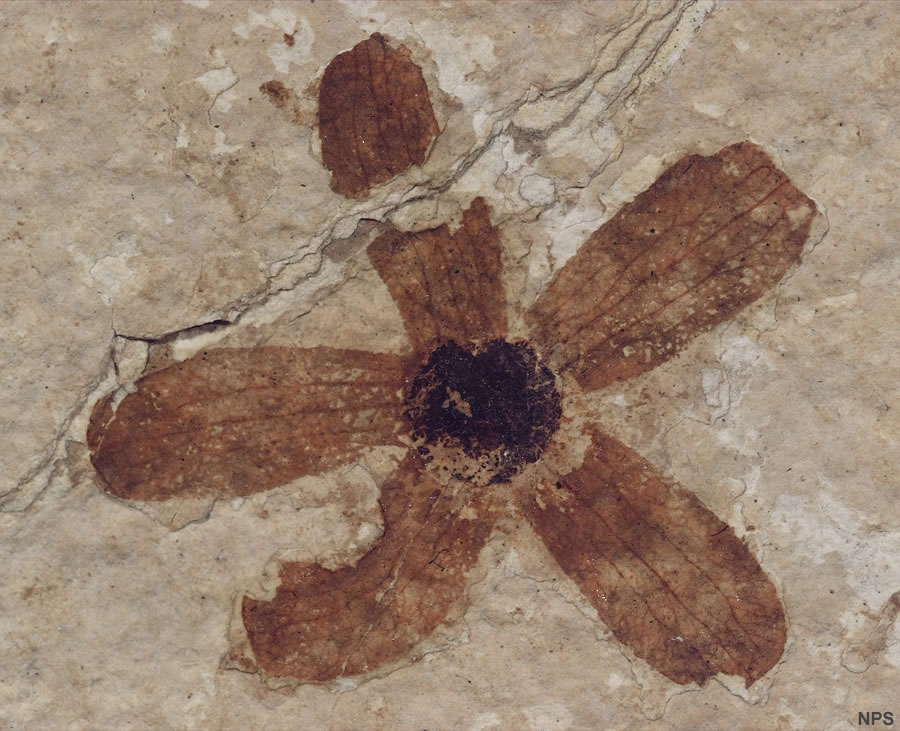
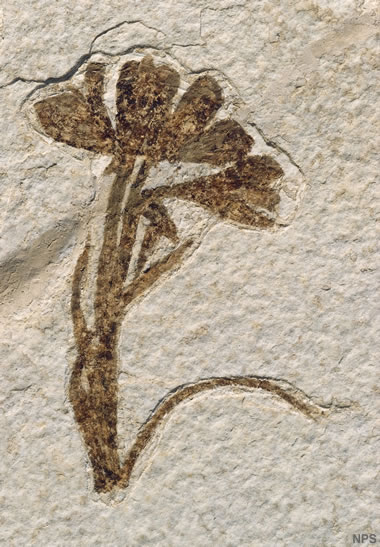
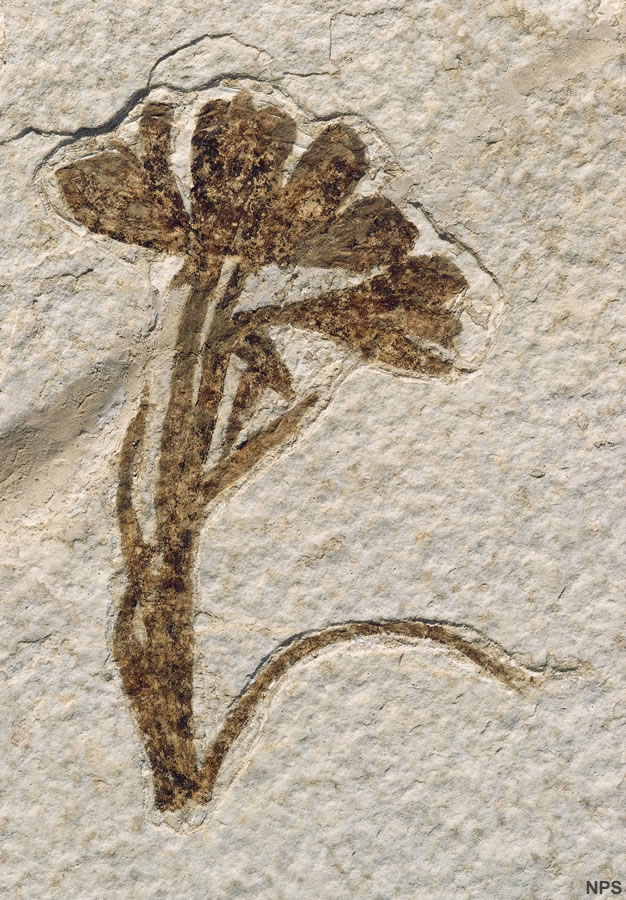
Fossilized flower: Fossilized plants are more difficult to identify than living plants because their parts often become separated before they are preserved. The plant that produced this flower may be impossible to identify because it is not attached to the rest of the plant. National Park Service photo. Enlarge image.
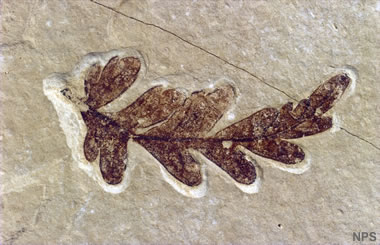
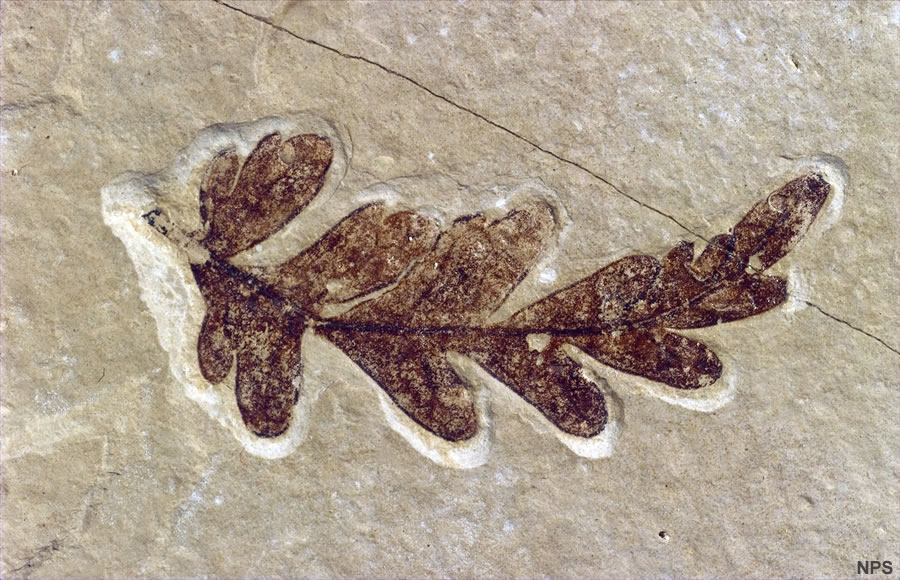
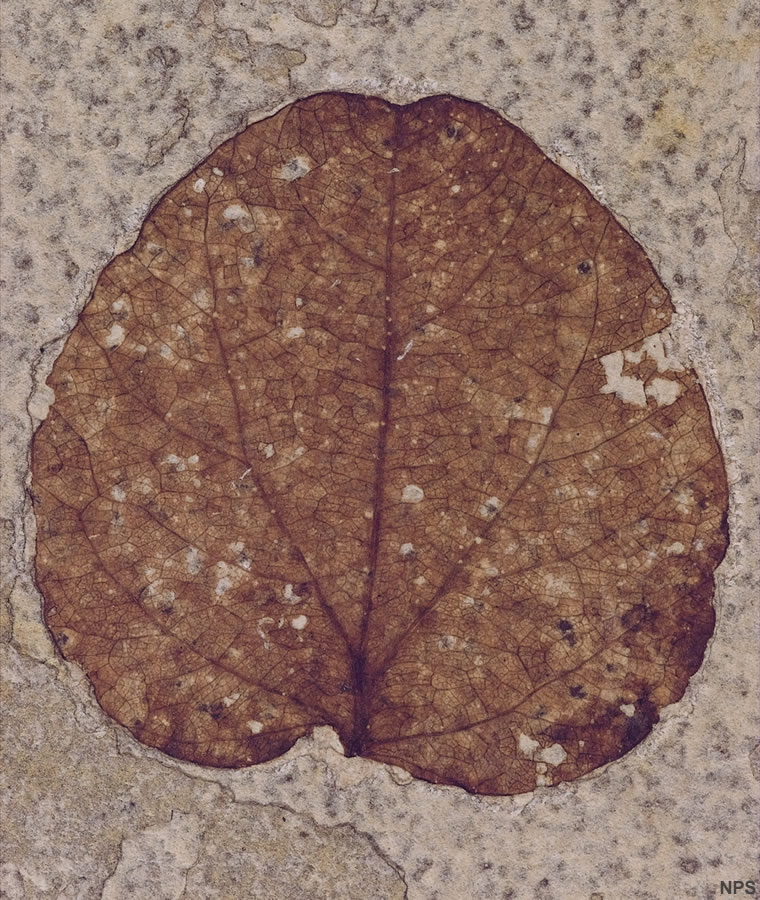
Fossilized leaf: Plants are key to understanding past climates. If a population of 25 or more different-shaped leaves are collected from a locality, paleontologists use a technique called leaf-margin analysis to estimate temperature and rainfall. Enlarge image.
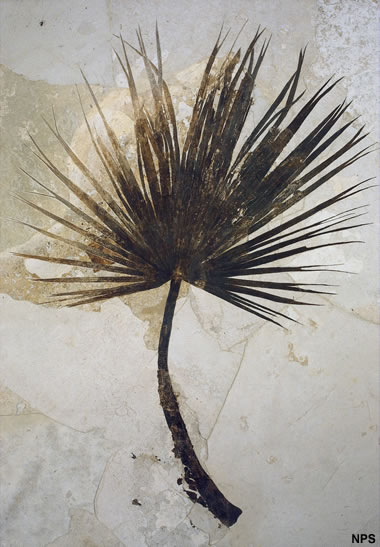
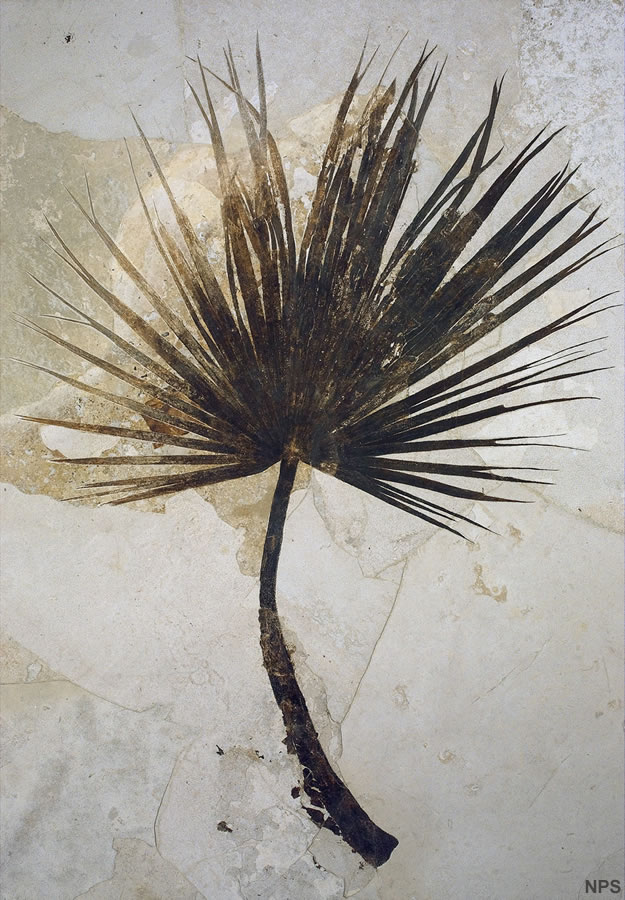
Fossilized palm: The presence of palm fossils indicates a much warmer and wetter climate 50 million years ago, probably similar to Florida's climate today. Enlarge image.
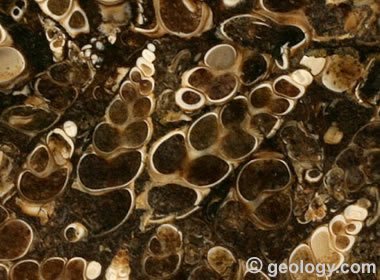
Turritella Agate: The Green River Formation is also the source of a fossil gem material known as Turritella Agate. It contains fossil gastropod shells.
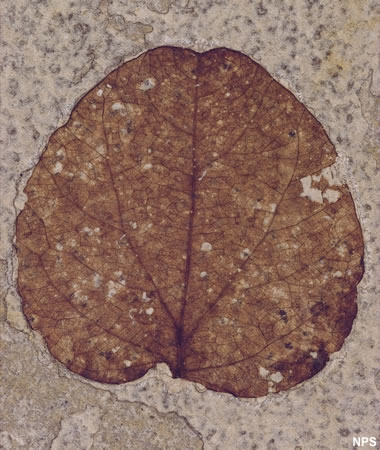
Fossilized plant: Fossilized plants are difficult to identify when their parts, stem, roots, leaves, and fruiting structures are not attached. National Park Service photo. Enlarge image.
| More Fossils |
 |
Animal Fossils |
 |
Ammolite |
 |
Petrified Wood |
 |
Fossil Fish |
 |
Fossils and Beer |
 |
Petrified Palm |
 |
Gifts That Rock |
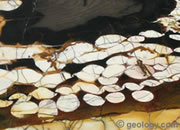 |
Peanut Wood |
Find Other Topics on Geology.com:
|
| ||
|
| ||
|
| ||
|
|