
Teaching |
Teaching Plate Tectonics | Earth's Internal Structure | Divergent Boundary |
| Convergent Boundary | Transform Boundary | Tectonic Features Map |
Transform Plate Boundaries are locations where two plates slide past one another. The fracture zone that forms a transform plate boundary is known as a transform fault. Most transform faults are found in the ocean basin and connect offsets in the mid-ocean ridges. A smaller number connect mid-ocean ridges and subduction zones.
Transform Plate Boundary |
 |
A Strike-Slip Fault is NOT a Transform Fault |
|
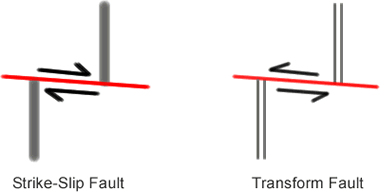
Transform faults can be distinguished from the typical strike-slip faults because the sense of movement is in the opposite direction (see illustration). A strike-slip fault is a simple offset; however, a transform fault is formed between two different plates, each moving away from the spreading center of a divergent plate boundary. When you look at the transform fault diagram, imagine the double line as a divergent plate boundary and visualize which way the diverging plates would be moving.
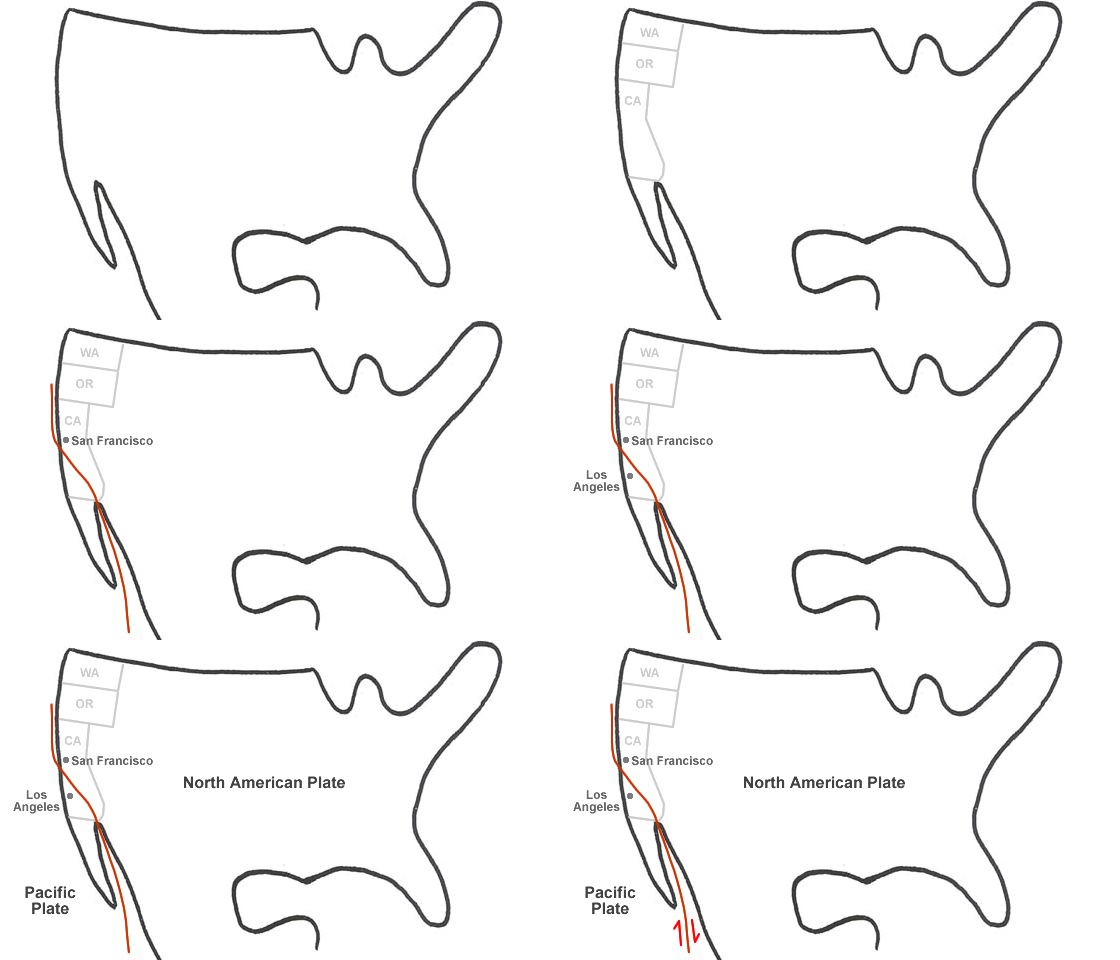
A smaller number of transform faults cut continental lithosphere. The most famous example of this is the San Andreas Fault Zone of western North America. The San Andreas connects a divergent boundary in the Gulf of California with the Cascadia subduction zone. Another example of a transform boundary on land is the Alpine Fault of New Zealand. Both the San Andreas Fault and the Alpine Fault are shown on our Interactive Plate Tectonics Map.
Contributor: Hobart King
Publisher, Geology.com
Teaching |
Teaching Plate Tectonics | Earth's Internal Structure | Divergent Boundary |
| Convergent Boundary | Transform Boundary | Tectonic Features Map |
| More Plate Tectonics |
 |
Teaching Plate Tectonics |
 |
California Earthquake Maps |
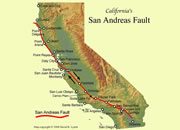 |
What is the San Andreas Fault? |
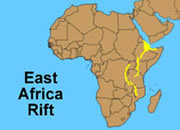 |
The East Africa Rift System |
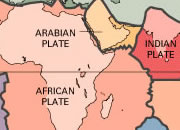 |
Plate Tectonics Map |
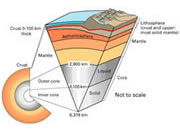 |
What Is The Moho? |
 |
Gifts That Rock |
 |
How did the Hawaiian Islands Form? |

Find Other Topics on Geology.com:
|

| ||

|

| ||

|

| ||

|
|